Latest questions answered by experts
Hi, I am looking to purchase a petrol/AMT car with a budget of Rs 9-12 lakh. My requirements are primarily city usage with monthly long drives, good safety, a spacious rear seat and boot, a smooth ride and strong after-sales service support. Kindly suggest a suitable car.
With a Rs 9-12 lakh budget, the Maruti Suzuki Brezza VXi AT is worth a close look. It gets a 6-speed automatic and starts at about Rs 10.5 lakh ex-showroom, so it fits comfortably within the budget.For predominantly city use with regular long drives, the torque-converter automatic will generally feel smoother and more relaxed than an AMT, particularly in stop-go traffic and during highway overtaking. It also fits the other requirements reasonably well, with good rear-seat space, a practical boot and Maruti's extensive service network.If you're specifically keen on an AMT, then the Fronx AMT is a sensible alternative and will leave you comfortably within budget. The Maruti Suzuki Fronx also offers a good balance of city usability, highway ability and practicality.

I am planning to buy a car with an automatic transmission and have shortlisted two options: the Kia Seltos HTX IVT and Tata Sierra TGDI Adventure Plus. I am upgrading from a 2018 Maruti Ciaz 1.4-litre. Which one should I choose?
Go for the Kia Seltos HTX IVT. Coming from a Ciaz, this Kia car will feel like a significant upgrade in terms of refinement, comfort and overall ownership experience. The IVT automatic is smooth and well suited to everyday driving, and Kia's service network and reliability track record are strong. The Seltos also offers a more premium and well-finished cabin, better rear seat space and a more polished ownership experience overall.The Tata Sierra TGDI Adventure Plus is a very interesting product with a strong turbo petrol engine and a more rugged, characterful appeal. However, the turbo petrol is a newer powertrain with a shorter ownership track record, and Tata's service experience is still not quite as consistent as Kia's.The Seltos HTX IVT is the safer and more sensible upgrade from a Ciaz, offering a more refined and hassle-free ownership experience. The Tata Sierra is worth considering only if you specifically want a more rugged, characterful SUV and are willing to accept a slightly less proven ownership proposition.
The parking space in my apartment is very small. I can park a car similar in size to a Wagon R, but anything larger will be tight. I am planning to buy a small car by 2028. My budget is up to Rs 13 lakh, and I want a car with cruise control. As far as I have seen, only Maruti makes small cars, but none of its current models appeals to me because they feel too basic and do not offer cruise control. I have heard that Maruti is planning to launch small cars such as the Suzuki Hustler and a new small EV similar to the eWX. Is it wise to wait for these models? Are they likely to be available by 2028?
Since you are planning to buy only in 2028, there is little reason to compromise on a car that does not meet your requirements today. The upcoming Hyundai compact EV, which will sit in the Punch EV/Nexon EV space, is particularly worth waiting for. It is expected to be a compact, city-friendly SUV with modern features, and Hyundai has already confirmed Level 2 ADAS and a new-generation infotainment system.Maruti Suzuki is also working on smaller products. The Hustler-based compact SUV has been reported for around 2027, while the eWX-based affordable EV is expected around 2027–28. However, the exact specifications, pricing and launch timelines are still not confirmed.
I am planning to buy a new crossover within a month and want to keep it for four to five years. My priorities are good resale value, decent highway acceleration and mileage. My budget is Rs 15-17.5 lakh, and I am considering only cars with a DCT, torque-converter, CVT or IVT automatic. I have shortlisted the Skoda Kushaq Signature, Hyundai Creta S(O), Kia Seltos HTK and Honda Elevate VX. I am also considering waiting for the new Elevate facelift in October. I was thinking of waiting for the Creta facelift as well, but it will take a few more months. I expect to drive 60% in the city, with occasional highway trips. I want a car that performs well on the highway, offers good overtaking ability and delivers decent mileage. I have driven Honda and Volkswagen sedans abroad. Which car would be the better fit for my needs?
Based on your requirements, the Skoda Kushaq Signature 1.0 TSI with the 8-speed torque converter automatic is the best fit. It offers strong mid-range performance for highway overtakes, a proven and reliable powertrain, and a driving experience that will feel familiar and engaging given your experience with VW group cars abroad. The torque converter automatic is smooth and well-suited to your 60% city usage, while still delivering the punch you want on the highway. This Skoda car also sits comfortably within your budget and is available immediately, which is important given your one-month timeline.The Hyundai Creta S(O) IVT and Kia Seltos HTK IVT are both excellent alternatives if you prioritise refinement and a more premium cabin experience. The IVT gearbox is exceptionally smooth in the city, but the naturally aspirated petrol engine does not offer the same mid-range punch as the Kushaq for highway overtakes. The Honda Elevate VX CVT is the most reliable long-term ownership proposition, but again, the naturally aspirated engine is not as strong on the highway.Waiting for the Elevate facelift in October is a reasonable option if you are not in a hurry, but the changes are expected to be incremental rather than transformative.Overall, the Kushaq Signature 1.0 TSI torque converter strikes the best balance between performance, reliability, driving enjoyment and immediate availability. It will deliver the highway performance you want while remaining easy to live with in the city.

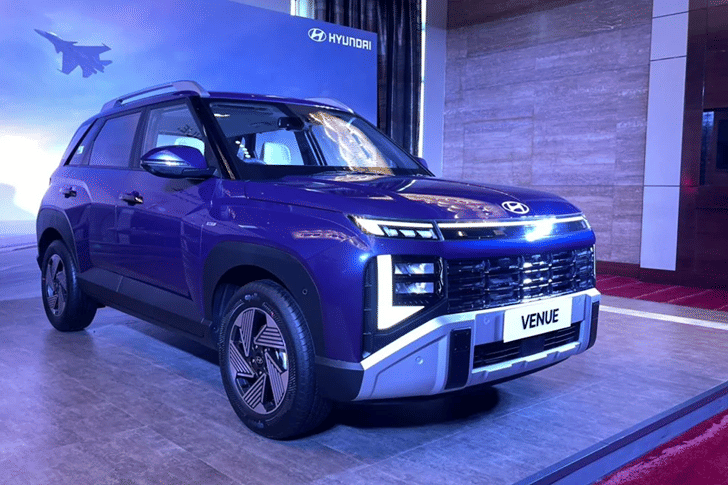
I am planning to buy a sub-4-metre SUV and have shortlisted the Mahindra XUV 3XO and Hyundai Venue. My main requirement is good rear-seat space along with decent performance. Should I go for the diesel or petrol variant? I am concerned about the poor mileage of the turbo-petrol engines in both cars.
Go for the Mahindra XUV 3XO petrol. It offers the most rear-seat space in the segment, a wide cabin, and a genuinely comfortable back seat, which is exactly what you are looking for. The Hyundai Venue is a good car, but its rear seat is not as spacious or as comfortable as the 3XO's. In terms of performance, both the 3XO and Venue turbo petrols are strong, but the 3XO's 1.2 turbo petrol is punchy and well suited to both city and highway driving.On the diesel versus petrol question, it really comes down to your running. If your annual mileage is below 15,000 km, the petrol makes more sense. Modern turbo petrols aren't as fuel efficient as naturally aspirated engines, but the difference isn't huge unless you are doing very high mileage. The diesel is only worth considering if you do a lot of highway driving and your annual running is high enough to justify the higher upfront cost.
Hi experts, I’m asking the same question from a different perspective. Since most of my driving is in Bangalore traffic, with a 70:30 city-to-highway usage pattern, does it make more sense to settle for the 1.0-litre engine with the 8-speed AT in the VAG group, or should I take the risk and go for the 1.5-litre DSG? I’m honestly more concerned about the possibility of DSG failure, especially with regular use in heavy traffic.
In the Skoda Kushaq or the Volkswagen Taigun, the 1.5 TSI DSG is considerably quicker and is the enthusiast's choice, especially if you frequently do highway runs. However, your concern about the DSG in heavy traffic is valid. A dual-clutch gearbox has to manage repeated low-speed clutch engagement in crawling traffic, so for predominantly bumper-to-bumper Bengaluru use, the torque converter is the more relaxed and sensible choice. The new 8-speed AT has also been specifically introduced to improve the 1.0 TSI's city usability and efficiency.
I own a 2015 Maruti Ciaz petrol MT, which I bought as a used car in 2019. As of today, it has clocked over 1,85,000km. Since most of my driving is in the city, parking can sometimes be difficult. I also undertake occasional long drives of around 1,000 - 2,000km round trip. I have not experienced any major issues with the car so far. The clutch assembly has been changed twice in the seven years of my ownership. Should I opt for a new car or continue maintaining and using my current Ciaz?
The decision to replace should be driven by either escalating maintenance costs or a change in requirements. If the car is still running well and there are no major mechanical issues, it makes financial sense to continue maintaining it. The cost of periodic maintenance and even occasional repairs will almost always be significantly lower than the depreciation hit and upfront cost of a new car.The only caveat is your mention of parking difficulties. If parking is becoming a genuine daily hassle, downsizing to a smaller hatchback like the Hyundai i20 or Maruti Suzuki Fronx compact SUV could be justified. Otherwise, the Ciaz remains a very capable and cost-effective car for both city driving and occasional long highway trips.
I currently own a Creta 1.4 CRDi E+ diesel variant and am looking to replace it. My budget is Rs 15 lakh, and I would prefer an EV, followed by a hybrid or diesel variant.
We would either Since you are coming from a Hyundai Creta, the Kia Syros EV is worth considering as it offers a more premium experience while still having a surprisingly spacious cabin despite its smaller exterior dimensions. This Kia car is also more comfortable than the MG Windsor, both in terms of ride quality and seating comfort. Its compact dimensions should also make it easier to manoeuvre in the city.The Windsor EV remains a strong alternative if maximum cabin space is the priority. Its spacious and airy interior make it a practical family electric car, and it would be a natural choice if you want to retain the sense of space you are used to in the Creta.
Dear Experts, I am planning to purchase a Mahindra XUV 7XO AX7 and would like to know whether Bharat (BH) Series registration is currently available in Tamil Nadu/Chennai. I am an employee of a leading PSU, hold an interstate-transferable post, and am eligible for BH Series registration under the applicable BH guidelines. I can provide the required Service/Eligibility Certificate, Employee ID, and other supporting documents. Kindly confirm whether BH Series registration is available in Chennai, Tamil Nadu.
Yes, Bharat (BH) Series registration is available in Tamil Nadu, including Chennai. The state government has notified the BH Series, and eligible applicants can register their vehicles under the scheme. Since you are employed with a PSU and hold an interstate-transferable post, you meet the BH guidelines' eligibility criteria. You will need to provide the required service/eligibility certificate, employee ID, and supporting documents at the time of registration. The process is handled through the Vahan portal, and the registration can be done at the RTO in Chennai. Do note that the BH Series is an opt-in scheme, so you will need to specifically request it during the registration process.
My maximum budget is Rs 15 lakh on-road in Mumbai. I’m okay with a petrol manual car. I need good rear-seat space and don’t want a cramped cabin. I prefer an SUV. Please advise.
Go for the Mahindra XUV 3XO petrol manual. It is one of the most spacious compact SUVs in the segment, with a wide rear bench that comfortably accommodates three passengers, making it a genuinely practical family car. The petrol engine is smooth and punchy, and the manual gearbox is easy to use in city traffic. This Mahindra car also offers a good ride quality and a strong feature set for the price. The only real drawback is that the boot is on the smaller side compared to some rivals, but if rear seat space is your priority, this is the best compromise. If you want a slightly larger boot and are willing to sacrifice some rear seat width, the Maruti Brezza is a good alternative, but overall the 3XO is the better fit for your requirements.
Hi team, I booked a Tata Punch Empowered+ EV in late June in Goa and was initially told that I might get it by September. However, the dealer now says that due to high demand, the delivery could be delayed until November - December. Since I made the booking, the Punch EV’s price is now quite close to that of the base Kia Syros EV. Concerns around after-sales service and the delivery delay are also making me a bit hesitant. I was therefore considering the Kia Syros EV HTK, the base variant. Is there any way to get a 360-degree camera fitted without voiding the warranty? Alternatively, can I install a dashcam that provides at least front and rear feeds on the car’s main screen, again without affecting the warranty? If this is feasible, I feel the Syros EV base variant could be a compelling option. Could you please suggest whether I should make the switch or stick with my existing Punch EV booking?
Given the delay and price increase on the Tata Punch Empowered+ EV, the Kia Syros EV HTK is now a very compelling alternative. It is a larger, more premium car with a more spacious cabin and a better overall ownership experience. This Tata car is still a good product, but the Syros EV is simply a more complete car for a similar price.On the 360-degree camera, the answer is unfortunately no. The Syros EV HTK does not come with the necessary hardware (multiple cameras, control module, integration with the car's electronics) to support a factory-style 360-degree system. Aftermarket kits are available, but they require significant wiring and integration work, and Kia will not support them under warranty.A dashcam is a better solution. You can fit a high-quality front and rear dashcam system without voiding the car's warranty, as long as the installation is done cleanly and does not involve cutting or splicing into the car's wiring harness. However, the feed will not display on the main infotainment screen. It will record to its own memory card and can be viewed on a phone app or a small screen on the dashcam itself.
I am new to driving and am looking for a sub-4-metre petrol SUV with a torque converter automatic gearbox. My budget is around Rs 12-13 lakh on-road. I have shortlisted two options: the Skoda Kylaq Signature automatic and the Mahindra XUV 3XO MX2 Pro automatic. We are a family of five. My current usage is mostly within the city, but based on my future work requirements, it could shift to an 80:20 mix of city and highway driving.
Go for the Skoda Kylaq Signature AT. For a new driver with predominantly city use, its 1.0 TSI with a 6-speed torque-converter automatic is smooth and easy to drive, while the compact dimensions make it relatively easy to manage in traffic. It also has a more mature, planted feel on the highway.The Mahindra XUV 3XO MX2 Pro AT is the better choice if rear-seat space is the priority. Its cabin is wider and more accommodating for a family of five, and its 1.2 turbo-petrol makes 200Nm, giving it stronger low-end and mid-range performance than the Kylaq.However, the 3XO's boot is also one of its compromises, while the Kylaq offers a better balance of driving dynamics, boot space and highway manners. With your usage potentially becoming 80:20 city/highway, the Kylaq's combination works particularly well.
This will be my first car purchase in Hyderabad, and I’m new to driving. I’m planning to buy an AMT car with a budget of around Rs 10 lakh. About 75 percent of my usage will be within the city, with occasional trips to the outskirts within a 100- 150 km range. Please suggest the best cars I should consider. Also, if I buy a petrol car now, will I face any issues with E20 fuel and rising petrol prices?
For a first-time buyer in Hyderabad with a Rs 10 lakh budget, predominantly city driving and short outstation trips, the Maruti Suzuki Swift AMT is the most sensible recommendation. It is compact, easy to drive in traffic, has light steering, and a smooth AMT calibration, making this Maruti Suzuki car ideal for new drivers. Maruti's service network is also a big advantage for hassle-free ownership.If you want a higher seating position and a more rugged feel, the Tata Punch AMT is a strong alternative. It offers better ground clearance for bad roads and a more commanding driving position, though the AMT is not as smooth as the Swift's.On E20, there is no need to worry. Modern petrol cars are engineered to run on E20 fuel, and the impact is limited to a slight drop in fuel efficiency. There is no evidence to suggest major long-term reliability issues. Petrol prices will fluctuate, but for your usage pattern, petrol remains the most practical and hassle-free choice.
I want to buy an automatic car under Rs 11 lakh. Most of my driving will be for short distances, with occasional long drives on highways.
In this price bracket, the Hyundai i20 IVT and Honda Amaze CVT are among the smoothest automatics, and both have reasonably well-equipped variants within your budget. The i20’s IVT is the smoother gearbox, particularly in stop-and-go traffic, making it a very easy car to live with for short-distance city driving.The Amaze CVT is the better choice if you want more space and a large boot, especially for those occasional highway trips. It also has a relaxed, comfortable character and remains a good long-term family car.
I drive around 6,000-7,000 km a year, but I’m not happy with the mileage of my Tata Altroz DCT. It averages only around 10 km/l, and with E20 petrol becoming more common, fuel costs are becoming increasingly challenging. What options or alternatives would you suggest?
With 6,000-7,000 km a year, the fuel cost is a concern, but the running is not high enough to justify a diesel car or a hybrid purely on savings. The Tata Altroz DCT’s 10 km/l is on the lower side, and E20 will reduce efficiency slightly, but the bigger issue is likely the DCT itself. Dual-clutch gearboxes are not the most efficient in stop-start city driving, and the Altroz’s DCT is not the most refined or efficient example either.The simplest solution is to move to a naturally aspirated petrol engine with a torque converter, IVT, or CVT automatic. These gearboxes are smoother in traffic and generally more efficient in real-world conditions. Cars like the Honda Elevate CVT will deliver better efficiency and a more relaxed driving experience. If you are open to a manual, a naturally aspirated petrol with a manual gearbox will be even more efficient.Hybrid cars like the Maruti Suzuki Victoris Hybrid or Toyota Urban Cruiser Hyryder Hybrid are the most efficient option, but at your running, the payback period is long. They make sense if you want the lowest possible fuel cost per kilometre, but not as a purely financial decision.
I am looking to buy a petrol automatic SUV around Rs 15 lakh for daily use. My priorities are good mileage, spacious interiors, low maintenance costs, easy access to service centres and a 5-star safety rating. After researching my options, I have shortlisted the new Maruti Suzuki Brezza ZXi automatic and the new Hyundai Venue HX5/HX6. Is this the right preference? If so, which of the two would be the better choice?
The Maruti Suzuki Brezza ZXi AT is the better fit for this brief. The naturally aspirated petrol engine is efficient and reliable; the torque converter automatic is smooth and proven, and Maruti's service network is unmatched. The Brezza also offers a spacious cabin with good rear seat comfort and a practical boot, making it a strong family car. Safety is well addressed too, with a 5-star Bharat NCAP rating.The Hyundai Venue HX5/6 is a good alternative with a more premium cabin feel and a slightly more refined overall package. However, the Brezza's wider service network and lower long-term maintenance costs give it the edge for your requirements.

I have been using an i20 for almost 14 years now, and I’m quite satisfied with its ownership experience and service quality. I’m now planning to upgrade to an EV, with a strict on-road budget of Rs 25 lakh. My monthly running would be around 850- 1,000 km, mostly within the city. Since my parents would accompany me on almost 40% of my trips, easy ingress and egress, along with a comfortable ride quality, are important to me. I’m looking for a reliable EV with good efficiency and a real-world range of 400+km. I have been considering the Creta Electric Executive LR and Smart LR, while some of my friends have suggested that I also look at the Mahindra BE 6. What would you recommend based on my requirements? I’d appreciate an expert opinion on which EV would be the better choice for me.
Given your requirements, the Hyundai Creta Electric Long Range is the most sensible recommendation. Your mostly city running is ideal for an electric car, and the Creta Electric offers a real-world range of over 400km, which gives you the flexibility to use it as your primary car without range anxiety. Coming from a Hyundai i20, the Creta Electric will feel familiar but also like a significant upgrade in terms of space, comfort, and overall refinement. The ride quality is excellent, and the rear seat is comfortable enough for your parents on regular trips. Hyundai's service network and ownership experience are also strong, which is important given your positive experience with the brand so far.Another strong contender is the Kia Syros EV, which uses the same powertrain as the Creta, but comes in at a lower price. This Kia car is a bit more compact but just as good on space, and the better news is that, thanks to its tall design, ingress and egress for your parents should be easier. The Mahindra BE6, meanwhile, is powerful and fun to drive, but very poor on space, practicality, and especially ingress and egress in the rear seats. Overall, the Creta and Syros are better bets.
MoRTH recently announced that the BS7 draft is expected to be released in the next couple of months. With that in mind, is it still wise to buy a BS6 car now, particularly in Delhi, where environmental regulations mean vehicles meeting older emission norms can face restrictions sooner than in other states?
Yes, it is still wise to buy a BS6 car now. The key point is that BS7 is still only a draft proposal, and there is no confirmed implementation date. Even if it is finalised soon, it will take time for the industry to adapt, and there is usually a lead time before new norms become mandatory. More importantly, BS7 is expected to be an incremental tightening of emission limits, not a fundamental change like the jump from BS4 to BS6. BS6 cars will remain fully compliant and legal to use for their entire permitted life.In Delhi, the 10-year diesel and 15-year petrol rule is based on the age of the vehicle, not the emission norm. BS6 cars will face the same timeline as BS7 cars once the rule is in place. Waiting for BS7 could mean delaying your purchase for an uncertain period without any meaningful benefit.
Hi, I am looking for my first EV. My daily driving is around 50 km from home to office, so I am looking for an EV priced around Rs. 25 lakh. I liked the Mahindra XEV 9S Pack 2, although it is slightly over my budget. I also like the MG Hector Tomahawk EV, which falls within my budget. I am confused between the two. Please guide me on which one would be a better choice for my requirements.
The MG Hector Tomahawk EV is definitely worth waiting for before making the final decision. On paper, it is a very strong proposition, especially at the price you are considering, and it could prove to be better value than the XEV 9e.However, the Tomahawk EV is a completely new product, so it is difficult to give a definitive verdict based purely on specifications. Real-world range, ride comfort, performance, refinement, charging experience and overall usability will only become clear after we have driven and tested it properly.The XEV 9s, meanwhile, is the more established choice and has already demonstrated that it is a capable, premium EV. If you are comfortable stretching your budget, it remains the safer choice today.But with your 50km daily commute and home charging, there is no particular need to rush into the XEV 9s.

Need expert advice?
Ask the Autocar community and experts.