
Autocar India
HA

Hari

1d

I am looking for a car with a naturally aspirated petrol engine paired with a torque converter automatic gearbox, within a budget of ₹16 lakh (on-road, Chennai). Could you please share the list of available options that meet this requirement? Additionally, I would like your opinion on whether opting for a turbo-petrol engine is worthwhile for daily office commuting in a metropolitan city like Chennai, considering traffic conditions and real-world usability.

Autocar India team

Autocar India

Verified
10h

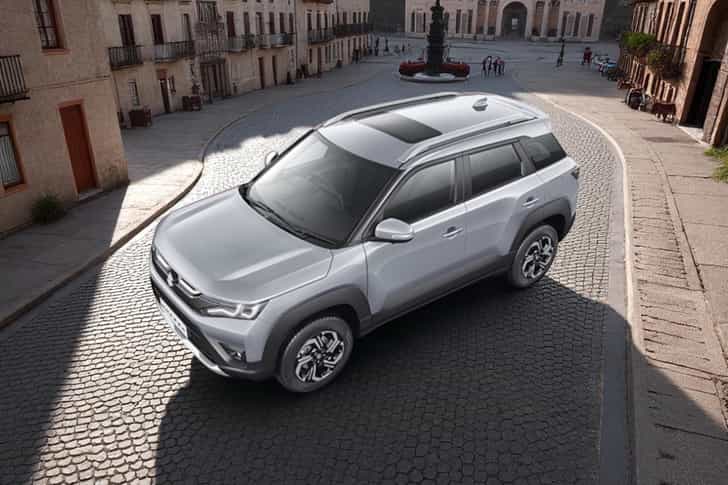
For mostly city use in Chennai with an on-road cap of Rs. 16 lakh, the Maruti Suzuki Brezza VXi AT fits your brief best. It has a simple 1.5-litre petrol, naturally aspirated engine without a turbo and a 6-speed torque-converter automatic, so it moves off gently and stays smooth when traffic is slow. The higher seat and compact size make it easy to see out, thread through gaps, and park, and Maruti service is widespread in Chennai.The flip side is that it is not very quick if you push hard, and the cabin feels a bit plain in this price range. If you want the full set of non-turbo petrol cars with a torque-converter automatic near your budget, these are the ones to look at: Maruti Suzuki Ertiga AT and Toyota Rumion AT in the lower trims if you need seven seats; the Maruti Suzuki Jimny AT has the same simple automatic but may just cross Rs. 16 lakh on-road in Chennai, so check deals. Most other petrol automatics in this price range use AMT or CVT-style gearboxes, not a torque converter.Do you need a turbo for a Chennai office run? Mostly no. In heavy traffic, you rarely use the extra power a turbo brings. Some small turbos also have a slight pause and then a jump when you press the pedal, which is not as soothing in stop-and-go driving. A non-turbo with a torque-converter automatic is usually the calmest. A turbo is worth it if you often carry a full family, climb flyovers a lot, or do fast runs on OMR/ECR or the highway. Overall, for city-only use, you will be happy without a turbo.

VehicleMaruti Suzuki Brezza
VehicleMaruti Suzuki Jimny
VehicleMaruti Suzuki Ertiga
Maruti Suzuki Brezza
AA

Aadhil

1d

I own a Citroën Basalt automatic. When I start the car and shift into reverse gear, I notice a sudden jerk. However, this does not happen once the engine has warmed up. Could you please explain the reason for this behaviour and let me know if it indicates any issue with the car?

Autocar India team

Autocar India

Verified
10h

This usually happens because the engine and the automatic gearbox are cold. Right after a cold start, the engine idles a bit higher, and the gearbox oil is still thick. When you slot into reverse at that moment, the reverse clutch grabs with more force than it does when warm, so you feel a quick jerk. Once the engine settles and the oil warms up, the shift into reverse feels smooth.If the jerk is small and happens only on the first cold start, it is generally normal and not harmful. Try this: start the car, keep your foot firmly on the brake, wait 5 to 10 seconds for the idle to settle, then shift to R. Do not touch the accelerator while selecting reverse. This should remove the thud.If the jerk is strong, comes with a clunk noise, or keeps happening even after a short warm-up, get it checked under warranty. Ask the workshop to run a true cold-start test after the car sits overnight and to check a few simple things: gearbox oil level and condition, any transmission software updates, engine idle speed when cold, and the engine and gearbox mounts. These can also cause a harsh engagement.Based on what you described, it sounds more like normal cold behaviour than a fault. Try the short pause on start-up. If it still bothers you, have Citroen log it on a cold morning, and they can fine-tune or fix anything if needed.

VehicleCitroen Basalt
DR

Drnatarajan

1d

I currently own a Volkswagen Taigun 1.5 TSI GT DSG and have been facing issues with jerky low-speed performance in city driving, along with persistent rattles despite multiple service visits. I am considering upgrading to either the Kia Seltos (turbo petrol DCT) or the upcoming Renault Duster (turbo DCT). My usage is around 60% city and 40% highway. My main concern is whether these alternatives will offer a smoother and more refined driving experience in city traffic compared to my current car, or if they will exhibit similar behaviour due to the nature of dual-clutch transmissions.

Autocar India team

Autocar India

Verified
12h

With 60% city use and you already unhappy with the Volkswagen Taigun’s DSG jerks and cabin rattles, the Kia Seltos 1.5 petrol IVT automatic is the safer bet for you rather than the turbo DCTs. The IVT is a belt-type automatic (essentially a CVT) that has no clutch to slip, so it moves off smoothly in slow traffic and is jerk-free at parking speeds. It is also easier to live with in our stop-go traffic, and power is adequate for your weekend highway runs, but it won't have the punch and pace of the VW Taigun 1.5.If you switch to a Seltos turbo DCT, its relaiively jerky too. Dual‑clutch gearboxes like the VW DSG and Kia’s DCT can still give a small lurch when you crawl in bumper-to-bumper traffic. On rattles, Seltos cabins we’ve used have held up quite well, but no car is fully immune to rough roadsTwo trade-offs with the Seltos IVT: it won’t feel as quick as your 1.5 TSI when you floor it, and on bigger wheels, the ride can feel a bit firm on sharp bumps.About the new Duster: it has a wet-clutch DCT, which is a bit slower to shift than the VW DSG, and it's not as smooth as the Kia IVT. t.Overall, for your mix and your pain points, the Seltos 1.5 IVT lines up best. If you really want a turbo punch, the Seltos turbo DCT is fine, but expect similar low-speed manners to your Taigun.

VehicleVolkswagen Taigun
VehicleKia Seltos
JA

Jai

1d

My family consists of five adults: myself, my wife, my parents, and my brother. I currently live in a different state, while my family stays in my hometown, and I visit them once every two months. During those visits, all five of us travel together, and in the next couple of years, our family size may increase to six members after my brother’s marriage. Our usage will be minimal, around 300 km per month, mostly on highways during occasional trips. I prefer an SUV-like driving position with good visibility of the bonnet. I am confused whether I should opt for a 5-seater or a 7-seater. If going for a 7-seater, I am considering the Maruti Ertiga VXI. If a 5-seater is more practical, I would like suggestions based on reliability, mileage, safety, rear seat comfort for three adults, and resale value. My budget is ₹12 lakh, and I prefer a petrol manual car with a long ownership period of around 10 years.

Autocar India team

Autocar India

Verified
13h

Your usage pattern is unique. You drive only occasionally but always with the full family, and in the near future, your family will grow to 6 members. A 5 seater will feel fine today, but it will become a limitation very quickly, especially for highway trips where comfort matters most.The Maruti Ertiga VXi works perfectly here. It is a proper 7 seater with usable third row space, good comfort for all passengers and a relaxed driving nature for highways. It is also known for good mileage, low maintenance and strong resale, which is important since you plan to keep the car for 10 years. The petrol engine is simple and proven, and even supports E20 fuel, so it is future-ready as well.Most importantly, it solves your core problem. You get a car where all family members can travel together comfortably, without compromise.If you go for a 5-seater instead, options like the Maruti Brezza or similar SUVs will give you a better front seat experience, and that SUV bonnet view you like, but for 3 adults at the rear, it will always feel tight, especially on longer trips. And once your family becomes 6 members, it simply will not work.

VehicleMaruti Suzuki Ertiga
VehicleMaruti Suzuki Brezza