
Latest questions answered by experts
Priyank Ahuja
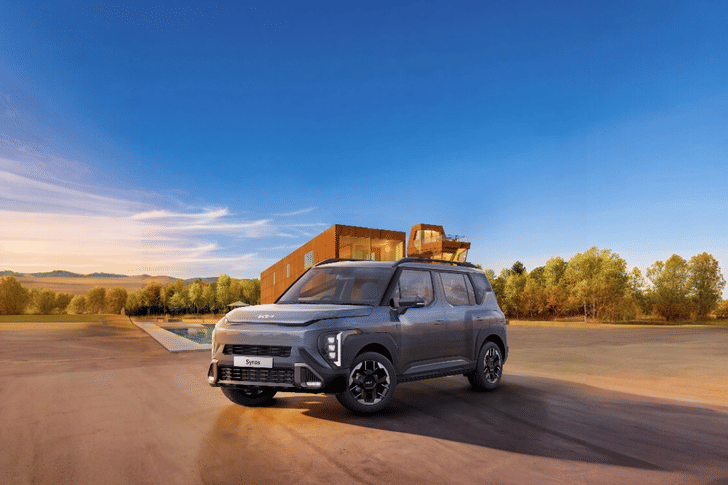
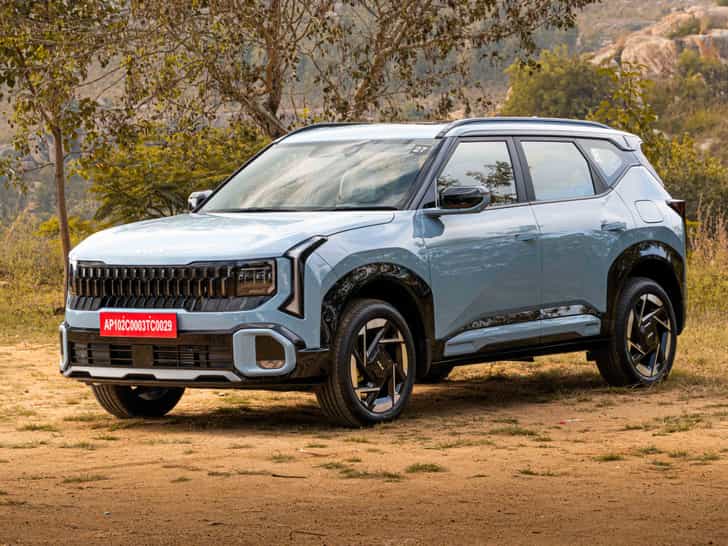
•10hI am currently using a 2016 Ford Aspire Petrol. My budget is up to Rs. 20 lakh, and my annual running is around 7,000 km, mostly in the city. I am extremely confused about whether I should buy a petrol car in 2026, considering the ongoing ethanol-blending developments, or switch to an EV. EVs seem very attractive, but I am unsure about long-term maintenance concerns since the technology is still relatively new, and my usage is quite low. The one factor that works strongly in favour of an EV is that I have a solar power plant at home, so charging would not be an issue and would effectively be free. On the other hand, buying a petrol car would involve a much lower upfront investment. I have received an offer for a 2025 Kia Syros top-end variant at an on-road price of Rs. 14.5 lakh, with features such as ventilated front and rear seats, ADAS, a 360-degree camera, and Harman Kardon speakers. However, I am concerned about owning a petrol car over the next 10-12 years. Please guide me on what would be the better choice.

Autocar India
With your low usage, most of which is in the city, an EV actually makes a lot of sense. With solar panels installed, your daily running costs will literally be zero, and we assume you'll be able to set up a home charger that makes use of this. With fuel prices the way they are at the moment, this will go a long way in offsetting the added upfront cost of an EV. Plus, there are the inherent benefits of an EV like refinement, smoothness and instantaneous response, which is great for traffic. While there are downsides to EVs, hidden maintenance problems aren't one of them. In fact, maintenance is much lower compared to an ICE vehicle, as there are fewer components to repair or replace, and the same goes for fluids and consumables. Things you will need to note: Range will always be on your mind and longer journeys will need planning, should you take them in your EV. In the long run, as the battery deteriorates, you may notice minor losses in power and range; and finally, when the battery reaches the end of its life, which is usually expected to be at least 10 years, the replacement cost is very high, and thus resale value of EVs tends to be quite low. Yes, there's uncertainty about petrol blending at the moment, but at the current standard of E20, all new cars are compatible and safe. The Kia Syros is an excellent car with loads of space and features, and good engines. So if you're getting a good deal and are happy with the car, consider going for it. An EV for the same money will not get you the same amount of space or features.

Kaustubh Jirapure
•20hI own a Hunter 350 Dapper White for over two years. Lately, the suspension has started to bother me, and I am considering upgrading to an adventure bike. Which model would you recommend within a budget of Rs. 7 lakh? If there is an upcoming motorcycle that is worth waiting for, I am also considering upgrading the suspension on my Hunter 350 in the meantime. I was particularly interested in the Honda NX500, but the latest version seems significantly more expensive. What would you suggest?

Autocar India
Since you're innately familiar with Royal Enfield ownership, upgrading to the Himalayan 450 seems like a safe bet. The Himalayan's suspension can iron out pretty much any road imperfection you encounter and its performance will be a big step up over the Hunter you own too. The only caveat with going for the Himalayan is that it is a tall and heavy bike, and these attributes will make their presence felt at slower speeds inside the city. If you want slightly higher performance levels on a lighter machine, then the KTM 390 Adventure models (whether you opt for 350cc or 399cc iterations is up to the budget you have) are worth considering. The KTM bikes have great handling, punchy top-end performance and come with features like adjustable suspension, traction control and a bidirectional quick shifter - depending on the variant. In your Rs. 7 lakh budget, you can also get the BMW F 450 GS, although depending on your city's taxation structure, you may need to stretch your budget a little if you are eyeing the top Trophy variant. The new entry-level GS is a competent machine and will be a step up in refinement from the single-cylinder machines mentioned above and it is also lighter than them. You will, however, need to be prepared for higher running and maintenance costs expected of a machine wearing the BMW badge. Take test rides of these machines to decide which one works best for you before you make your next purchase. If none of these options seem enticing, you could also retrofit the latest-gen Hunter's suspension to your older model which will bring some much needed relief in terms of ride quality. Do bear in mind that this swap will likely void your warranty and we'd recommend reaching out to your nearest dealership for more clarity on the same.
Isaac Paul Parisapogu
•10hMy running is very low, around 250 km per month, mostly in bumper-to-bumper traffic. I also undertake three to four trips of about 500 km each per year. I am concerned about the future rollout of E30 petrol. In this scenario, should I go for a petrol or a diesel vehicle?

Autocar India
Go for petrol. With 250 km a month in bumper-to-bumper, a modern diesel’s exhaust filter hates short, cold runs and can clog, forcing frequent regeneration and workshop visits. You also won’t recover the higher diesel price and upkeep with such low running, and your handful of 500 km trips a year don’t justify it.About E30, you can buy a new petrol car which are today E20-ready and the move to higher ethanol blends would be to E30 or even likely a lower blend like E27. An E20 car will most likely not face material compatibility issues as most manufacturers say that they have factored in material compliance at slightly higher ethanol levels given that, that is the case internationally. However, expect a small drop in mileage and performance versus E20 because of ethanol’s lower energy and the fact that your cars ECU has been calibrated with E20 in mind. If you want to avoid ethanol questions entirely, an EV also fits your low daily use and given that most of your driving is in bumper to bumper traffic, an EV would be ideal given its smooth and easy to drive experience. For your 500 kms long trip though, you will need at least one halt to charge.
Ankit
•19hI am based in Gurgaon and am a family of three. I am currently working from home, with office trips to Noida around 4-5 times a month. The car will be mainly used for city driving with weekend trips around NCR, and 4-5 mountain trips a year. I am confused between Kia Seltos HTK(O) IVT, Kia Seltos HTK(O) Turbo DCT and Tata Harrier Petrol Pure X Dark AT. I liked the Seltos Turbo DCT during the test drive, but I'm wondering whether the turbo performance makes a meaningful difference in real-world usage or if the IVT is the more practical choice. Reliability and hassle-free ownership are important parameters for me. The Harrier is more appealing because of its size, space, and road presence, but I'm unsure if buying it is worth the extra cost and potential ownership concerns. Which one do you suggest for my usage and why?

Autocar India
The Kia Seltos HTK(O) IVT would be the recommendation for your usage. While the Seltos Turbo DCT is undoubtedly the more exciting car to drive, the reality is that most of your mileage will come from Gurgaon, Noida and NCR city driving. In those conditions, the IVT's smoothness and ease of use become more valuable than the turbo's extra performance. The naturally aspirated petrol engine is adequate for highway cruising and mountain trips, and the IVT is one of the most refined automatic gearboxes in daily use.The Turbo DCT does make a noticeable difference when accelerating hard, overtaking on highways or driving enthusiastically in the hills. However, it comes with a price premium and the performance advantage is unlikely to be fully utilized given your predominantly urban usage.The Harrier Petrol Pure X Dark AT is the emotional choice. It has a much stronger road presence, a more spacious cabin and a larger boot. It also comes surprisingly well equipped for the variant. However, it is a significantly larger and heavier SUV, and fuel efficiency will be noticeably lower than either Seltos, especially in NCR traffic. For a family of three, the extra space is nice to have rather than essential.Reliability and ownership experience are also important considerations. Kia currently has an edge here, and the Seltos feels like the safer long-term bet if hassle-free ownership is a priority.

Sukhpal
•10hI have shortlisted Maruti Breeza Vxi AT( automatic). When I visited the dealer, I found that they are offering a heavy discount on Maruti Suzuki Victoris AT, and the price difference is not much. Is this worth buying Maruti Victoris? My only worry is that it is newly launched. Is its performance good, and after 5-6 years, will I get good resale value? As the dealer is offering a heavy discount, is everything ok with this car?

Autocar India
Go for the Victoris. It is the newer and bigger vehicle, offering more cabin space, greater practicality and a larger boot than the Brezza. The interior also feels more premium and modern, which will make a difference over the years of ownership.The only notable drawback is that the coupe-like sloping roofline slightly compromises rear headroom compared to a more conventional SUV design. However, for most buyers, this is unlikely to be a deal breaker.The discounts are not necessarily a cause for concern and are fairly common on newly launched models as manufacturers and dealers look to build momentum.Another factor worth considering is that the Brezza is expected to receive a facelift later this year. Buying the Victoris now means getting Maruti's newer product with a fresher design and cabin.
Rohit
•21hI have asked the Kawasaki showroom in Ludhiana, and they said the off-road price of the Kawasaki Ninja is 3lakh 75 thousand, but here you have mentioned the off-road price is 3.14 lakh.

Autocar India
The ex-showroom price of the Kawasaki Ninja 300 is Rs 3.17 lakh, pan-India, and we guess that you and the dealer are getting your wires crossed with regards to ex-showroom and on-road pricing. Many people say off-road when they mean on-road. Ask the dealer for a clean breakup with ex-showroom, road tax/RTO, insurance, and every add-on listed separately. Remove anything you don’t want, and you’ll see the number drop a bit, but it most likely won’t get anywhere near the figure you're being quoted for a new Ninja 300 in India today.
Need expert advice?
Ask the Autocar community and experts.